In this story
You’re On Your Own, Kid starts with attention directed outward: toward a person, a place and a life that might finally become available. It gradually turns that attention back toward the person doing the waiting. The change is powerful because the song keeps returning to the same central thought while altering what that thought allows the narrator to do.
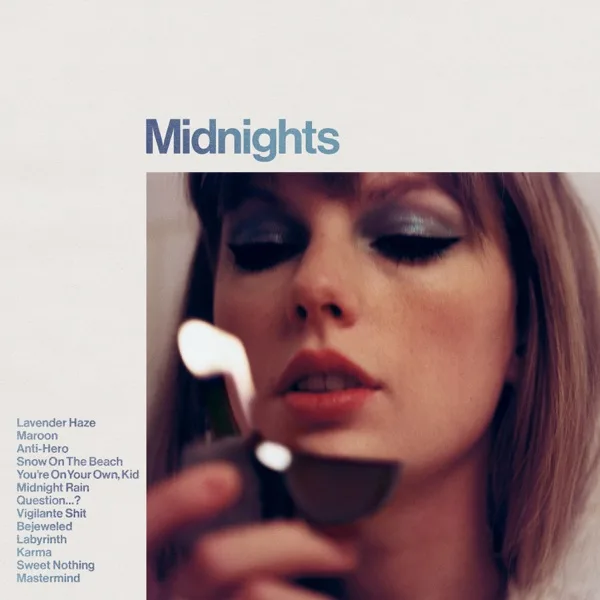
The fifth track on Midnights was written and produced by Taylor Swift and Jack Antonoff. Its restrained beginning and accumulating force make it one of the album’s clearest emotional journeys. The destination is not a life without disappointment; it is a different relationship to the fact that disappointment has happened. [2]
Listen to the song
Listen to the original studio recording from Midnights.
Waiting to become someone else’s choice
At first, the narrator’s future depends on an answer from outside herself. A particular person seems able to make a place feel worth staying in. The attention given to that possibility makes the rest of life seem temporarily suspended, as though the right response would establish both where to belong and who to become.
The song captures how small signs grow during that kind of waiting. A familiar setting can become charged with an imagined future. The attraction is not only to the other person, but to the version of the self that might exist if the desire were returned. Rejection threatens the entire picture rather than one isolated encounter.
The early arrangement leaves space around these thoughts. Its relative restraint makes the voice’s recollection feel close, almost private. The song does not begin by announcing a lesson. It lets the listener remain inside the wish long enough to understand why moving beyond it will require more than a brisk statement of independence. [3]
A refrain whose meaning keeps moving
The title initially sounds like a discovery the narrator would rather not have made. Being on her own means that an expected form of rescue or recognition has failed to arrive. The direct address makes it possible to hear the line as something the older voice says to the younger one, with tenderness and severity uneasily mixed.
As the song moves through other ambitions, the same refrain can accompany a different disappointment. Romantic attention is one way of wanting to be chosen; a larger audience offers another. Changing the scale of the wish does not automatically resolve the feeling that someone else possesses the answer to your life.
Repetition makes those experiences comparable without flattening them into one event. Each return gathers the history of the previous one. By the end, the sentence carries enough experience to support a different response. The words can remain the same while the person speaking them has acquired another perspective. [3]
The build earns its change of feeling
The later passage becomes more crowded with remembered effort and consequence. The arrangement gathers weight alongside it, allowing the song’s emotional movement to happen through momentum as well as argument. The listener feels the pressure of accumulated experiences before hearing the narrator begin to use them differently.
The details are not all triumphant. Some describe what trying to secure acceptance has cost. That matters because an uplifting ending would feel thinner if it treated every difficult choice as simply necessary preparation for success. The song retains the discomfort of the past even as it searches for a less punishing way to carry it.
The shift comes through recognizing usable fragments within that history: a moment worth keeping, a new person worth meeting, something that can be made. The scale of the answer becomes smaller than the scale of the old ambition. A life does not have to be conclusively validated before it contains an experience worth having. [3]
A small thing to make, a person to meet
The late invitation to make friendship bracelets gives the conclusion an unexpectedly concrete object. After a song full of waiting and striving, making something small suggests an action that can be taken now. A bracelet does not settle the narrator’s history. It creates an occasion for another moment.
Fans carried that image into the Eras Tour by making and exchanging beaded bracelets. The shared practice is a compelling response to a song about being on your own: it turns an individual recognition into a gesture offered to someone else. The connection does not contradict the refrain. It shows one thing a person can do after accepting it.
The ending therefore feels encouraging without promising permanent safety. The narrator can continue, create and meet people while knowing that no one else can live the experience for her. Listening back to the opening after the final passage makes that transformation especially clear. The distance between abandonment and permission is the journey the song has taken. [3][4]