In this story
Anti-Hero makes self-criticism unusually easy to sing along with. The narrator can identify a fault with the briskness of a greeting, then move into images that are exaggerated enough to become funny. The joke does not remove the discomfort. It gives the discomfort a form that can be repeated in public.
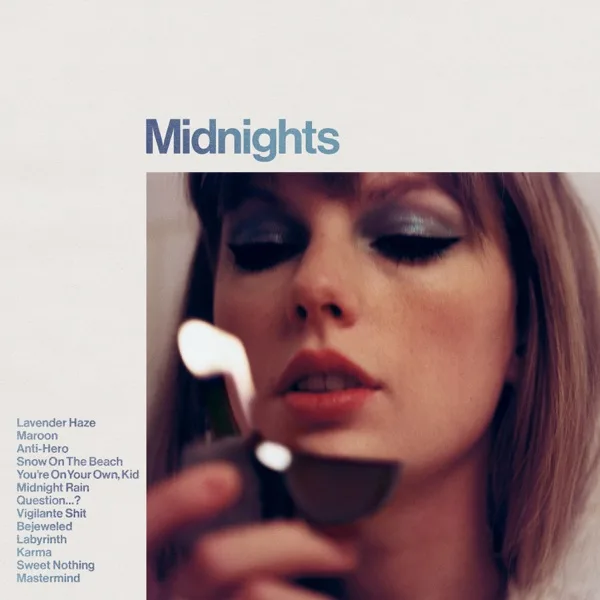
On the original Midnights, the third track follows Maroon and precedes Snow On The Beach. Its direct, conversational opening interrupts the more enveloping atmosphere around it. Written and produced by Taylor Swift and Jack Antonoff, the recording puts a troubled assessment of the self inside a compact, inviting pop arrangement. [2]
Listen to the song
Listen to the original studio recording from Midnights.
A greeting that becomes an accusation
The chorus enters with the apparent simplicity of someone identifying herself. In most conversations, that gesture opens a meeting. Here, it also announces a verdict. The speed of that change is the song’s first great joke: a whole argument about responsibility is compressed into an introduction.
Because the refrain is catchy, the listener can become part of the repetition before considering its severity. The music encourages participation in an assessment that the verses make less straightforward. A character can admit a flaw and still be an unreliable judge of its size. Recognizing that tension gives the hook more than one emotional use.
The greeting also makes the narrator sound practiced. She seems to know the explanation everyone expects, and she can deliver it efficiently. That efficiency can be read as honesty, fatigue or a defensive shortcut. The recording holds those possibilities together instead of choosing a single, reassuring meaning. [3]
Small worries acquire impossible proportions
The verses move from familiar misgivings into images that stretch beyond an ordinary social scene. The sense of being out of place becomes a problem of physical scale; concern about how others perceive an action becomes suspicion about the motive underneath it. Thought keeps finding a larger, less comfortable picture.
Those changes in scale make the humor work. An exaggerated image can reveal how disproportionate a fear feels without proving that the fear is unreal to the person experiencing it. The listener is allowed to notice the absurdity and remain sympathetic. That combination gives the narrator room to be difficult without making the song emotionally remote.
The delivery matters as much as the images. Swift often sounds as if she is reporting an unfortunate observation rather than asking the arrangement to dramatize every word. The comparatively even musical motion lets the mind’s escalation stand out. A worrying thought can arrive almost casually, which makes its implications more startling. [3]
The family fantasy changes the audience
The later imagined family scene extends the question beyond the present moment. The narrator projects a future in which even her death becomes an occasion for other people’s calculations. The comic premise is extravagant, but the underlying concern is recognizable: what story will remain when she cannot intervene in its telling?
That fantasy changes the song’s audience. Earlier passages address the difficulty of living with the speaker; now imagined survivors become interpreters of her life. The chorus returns after that detour with a broader shadow. Self-blame has become a fear that every possible audience, including one in the future, will reach the same conclusion.
The scene’s theatricality keeps it from functioning as a literal prediction. It belongs to the song’s habit of taking a troubling possibility to an absurd limit. Hearing it that way preserves both the joke and the emotional logic. The narrator’s imagination is a powerful storyteller, even when its stories are unkind to her. [3]
The song and video offer different endings
The recording stays inside the returning refrain. Repetition can sound communal in a room of listeners, yet the speaker’s verdict continues to recur. The song does not supply a final argument that settles whether the narrator’s assessment is fair. It lets recognition and unease share the same hook.
Swift’s self-directed video gives those competing attitudes separate bodies. Its doubles and oversized figure turn a private argument into a visible relationship, and its final meeting suggests a way for the figures to occupy a scene together. The video’s resolution can soften the experience of the song without erasing the recording’s unresolved repetition.
Heard alongside You’re On Your Own, Kid, Anti-Hero becomes one side of Midnights’ conversation with the self. One song keeps circling an accusation; the other gradually changes the meaning of being alone. The album’s intimacy comes partly from allowing those different conclusions to coexist. [3][4]