In this story
A friendship bracelet is a remarkably modest object for a tour on the scale of the Eras Tour. A few colored beads and a word can fit in a palm. Yet that smallness is what makes it useful: it can be made at home, carried into a crowd and offered to someone you have only just met.
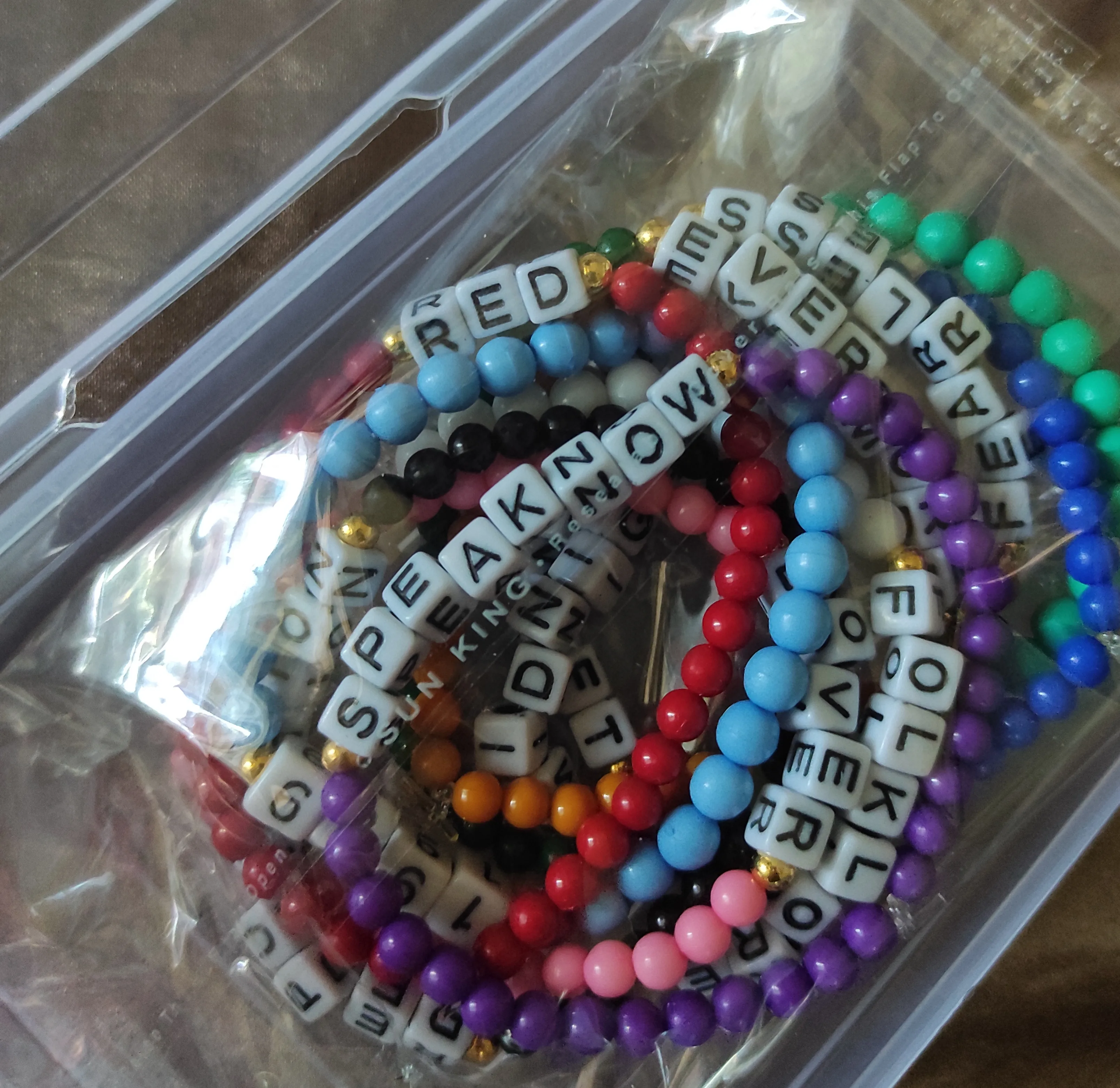
Fans connected the practice to You’re On Your Own, Kid, the fifth track on Midnights. Beaded bracelets bearing song titles and other references became a recognizable part of the tour’s fan culture. The interesting story is what happens between making and keeping one: anticipation becomes a craft, a shared reference becomes an introduction, and an anonymous crowd acquires individual encounters. [1]
A song about solitude becomes an invitation
The link to You’re On Your Own, Kid makes the custom especially expressive. The song moves from waiting for recognition to finding things worth making and moments worth having. A bracelet can enact that change at a very small scale: choose some letters, thread some beads, and create something that can leave your hands.
Its meaning develops when another person receives it. A private response to a recording becomes a brief exchange between listeners. The song’s conclusion does not have to be translated into a grand statement of solidarity. It can become the simpler experience of someone recognizing a title on your wrist and starting a conversation.
That is a useful kind of fandom because it permits different levels of involvement. One person may arrive with dozens of bracelets and carefully planned references; another may recognize only the album name on a single one. The object can open an encounter without requiring both people to demonstrate the same amount of knowledge.
The concert starts at the kitchen table
In CNA Lifestyle’s interviews before the Singapore shows, seventeen-year-old Darryl described making about 250 bracelets, sometimes working with his sister and friends while listening to Swift. The example captures how preparation can become a social event in its own right. The show’s date supplies a reason to gather before anyone reaches the venue.
Making gives anticipation a rhythm. Selecting a word, looking for a missing letter and choosing the next color are small decisions that can occupy the waiting period. The finished bracelet records those choices, but the time spent together can be just as valuable as the object. A concert memory can begin well before the performance.
Handmade variation is part of the appeal. Two people can choose the same song title and produce quite different objects. A slightly uneven sequence of beads still carries a recognizable reference and the evidence that somebody took time over it. That individuality makes a received bracelet feel different from a uniform souvenir bought at a counter. [1]
Song titles become a shared vocabulary
Letter beads make a reference legible at conversational distance. A title is often enough to invite recognition, while a color choice can add a second layer for someone who associates a particular palette with an album. The bracelet turns a large musical catalog into a set of small, portable prompts.
Some references are easy to enter; others work like a puzzle. Both have their pleasures, but obscurity does not automatically make an object better. A simple album name can be the most effective way to meet someone who is discovering that record. A more specific reference can reward an existing shared attachment.
The examples below are ideas to make, rather than a code with required meanings. Colors and wording can be personal. The useful question is whether the design gives you something enjoyable to offer and talk about.
| A starting idea | What to put on it | A conversation it might open |
|---|---|---|
| An album you love | MIDNIGHTS, with colors you choose | Which song brought you into this album? |
| A favorite listening moment | A song title that fits your wrist | When did this song first click for you? |
| An accessible first bracelet | SWIFTIE or ERAS TOUR | Is this your first show or screening? |
| A bracelet to keep | A date or initials meaningful to you | What part of the day do you want to remember? |
The exchange can travel beyond the stadium
The practice also found occasions outside the live tour. CNA interviewed Gabrielle Teo, who described first trading bracelets at an Eras Tour movie screening in November 2023. A cinema audience could create its own version of the encounter, showing that the exchange depended on people gathering around the music as much as on a particular venue.
Once exchanged, the object continues to work differently from a photograph. It may recall the person who offered it, a conversation in a queue or a song discussed before the lights went down. The bracelet can preserve an interaction too brief to appear in a concert’s official account. That is part of its charm as a keepsake.
The strongest version of the ritual leaves room for choice. Offering one can be a friendly opening; receiving one does not need to create an obligation to match the effort. Some listeners will prefer to watch, talk or simply enjoy the music. The custom is most inviting when its generosity remains easy to accept rather than becoming another requirement for belonging. [1]