In this story
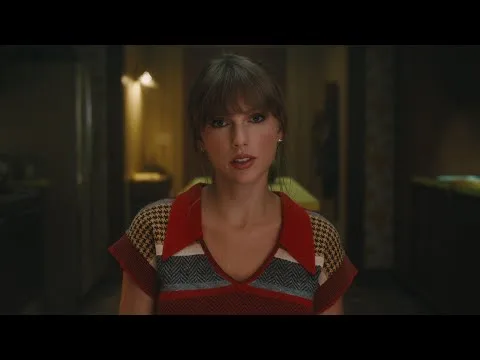
Anti-Hero’s video takes the song’s troubled narrator and gives her company: other versions of herself. The result is a small cast capable of arguing, behaving badly and making an uncomfortable thought into a visible event. Its comedy depends on how ordinary those interactions can feel even when the premise is impossible.
Released with Midnights on October 21, 2022, the video was directed by Taylor Swift. It uses doubles, exaggerated size and an extended funeral fantasy to explore the recording’s self-criticism. The song page follows the vocal and musical argument; this page follows the visual choices that change how that argument feels. [2]
Watch the video
Watch Taylor Swift’s official, self-directed Anti-Hero music video.
YouTube could not play this video here. Open it on YouTube to keep watching.
The critic gets a body
The video’s central invention is to let different versions of the speaker share the frame. A private argument becomes a relationship with another person who happens to look identical. That is more dramatically useful than a single mirror image: a double can intrude, demonstrate a behavior and redirect a scene.
The arrangement gives the viewer a way to distinguish the person struggling with a feeling from the version encouraging the struggle. Neither figure needs to represent a complete, stable identity. Together, they stage the experience of recognizing an impulse as your own while also experiencing it as an unwelcome visitor.
This makes the humor interpersonal. The viewer can understand an awkward interaction immediately, then recognize that the interaction is happening within one divided self. The device preserves the song’s sharpness while allowing reactions and timing to do work that the recording leaves to vocal delivery. [2]
Feeling out of place becomes architecture
The oversized version of Swift turns the song’s disproportionate self-image into a problem of space. A person can be physically present and still seem unable to fit the scene. The scale difference gives the fear an absurd, visible form before it needs a realistic explanation.
The effect also changes the viewer’s sympathy. From inside the narrator’s account, being too large can feel like evidence of being wrong. Seen from outside, the figure’s difficulty occupying the environment can look lonely and vulnerable. The video gives the audience room to respond differently from the character’s own harsh assessment.
This is where the visual version adds something to the recording. The song makes the image memorable through a phrase; the screen can show a surrounding world that is poorly matched to the person in it. The mismatch becomes a relationship between a body and its setting rather than merely a judgment lodged in the body. [2]
A funeral interrupts the pop timetable
The imagined funeral expands into a spoken comic scene. Its interruption of the song changes the viewing rhythm: a pop video briefly asks the audience to follow a family argument with the timing of a sketch. The pause gives a secondary image from the recording an independent dramatic life.
The scene puts future interpreters of the narrator on screen. They have their own expectations and grievances, so the fear of being misunderstood acquires multiple voices. Its grotesque premise makes those voices funny while allowing the viewer to recognize how much of the fantasy concerns control over a story after its subject is gone.
The interruption also exposes the imagination’s capacity to overproduce an anxiety. A passing fear has become a set, a cast and an argument. That extravagance suits a song in which the mind repeatedly turns a discomfort into a much larger picture. The comedy comes partly from watching that machinery carry on beyond any practical need. [2]
The ending allows everyone into the scene
The final meeting of the three versions offers a different emotional arrangement from the confrontations earlier in the video. They share a moment instead of arranging a contest to decide which one should disappear. The oversized figure remains oversized; the doubles remain visibly distinct. The resolution works through coexistence.
That choice avoids an implausibly complete transformation. The visual story has not established that every troubling impulse has been eliminated. It has made room for a less hostile relationship among the figures. The final image can be read as a truce rather than a cure, which keeps its lightness from feeling cheaply reassuring.
Compare that ending with the recording’s repeated self-accusation. The song keeps the listener inside the loop, while the video offers a scene outside it. Moving between the two versions is rewarding because they emphasize different possibilities in the same material. One makes the feeling contagious through a chorus; the other imagines what it might look like to sit with it. [2]