In this story
The Red chapter makes change conspicuous. A song can begin with acoustic familiarity and move toward a large pop hook; a performance can change from brisk choreography to a singer seated at a piano. The variety is part of the appeal, because the record’s emotional states are rarely uniform either.
The original album was released on October 22, 2012. The official tour archive begins in Omaha on March 13, 2013. This guide follows how that varied musical language became a visual and live identity. The album page keeps the sixteen songs in their original sequence; here, their different scales become the center of the story. [1][3]
One color can hold several different moods
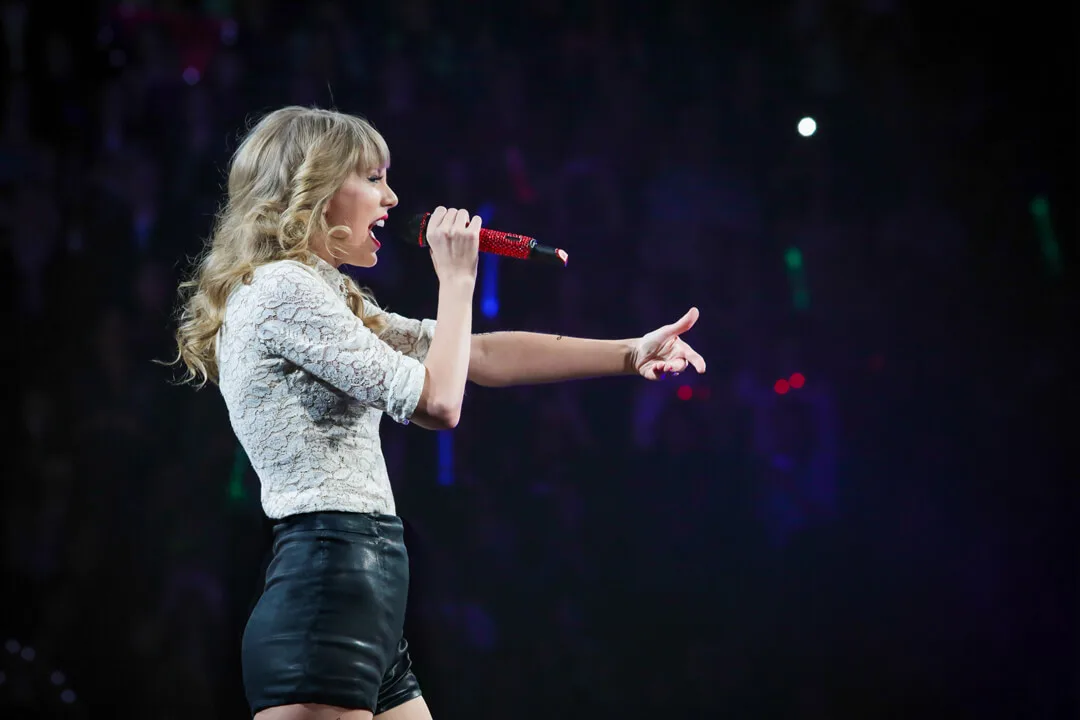
A red microphone against a black-and-white stage outfit
Photograph published in Taylor Swift’s official era archive · Source ↗An intimate performance at a red piano
Photograph published in Taylor Swift’s official era archive · Source ↗A red guitar in a brighter stage setting
Photograph published in Taylor Swift’s official era archive · Source ↗A red microphone, a red guitar and the red piano in the official photographs give the chapter a repeated visual anchor. Around that anchor, the clothes and the size of the scene can change. The color makes a varied show recognizable without forcing every song into the same costume or emotional register.
That is a useful answer to an album whose sounds move so quickly. The staging can identify the larger chapter while letting a particular song establish its own terms. A close piano performance and a brightly projected group number can belong to the same evening without pretending they produce the same sort of contact.
The RED name also works differently when it appears as a color, a record title or a shouted refrain. Each form concentrates a larger experience into something easily recognized. The visual identity can therefore travel between a sleeve, a stage object and a listener’s memory of an evening. [1]
The transition is interesting before it becomes a destination
We Are Never Ever Getting Back Together and I Knew You Were Trouble show the chapter’s interest in a forceful pop presentation. Begin Again makes a smaller encounter visible. Their videos give different routes into the record, allowing the promotional world to be as varied as the songs themselves.
The live piano is a particularly valuable counterweight to the larger gestures. A long recollection needs time and focus, and a comparatively contained scene can provide both. The performer’s stillness then becomes an event within a show that has taught the audience to expect motion.
Red is often approached through what followed it, but the in-between position has its own pleasures. Its chapter can hold several possible futures at once. Moving from the original album to the tour photographs, then to 1989, makes the later pop reinvention easier to hear without treating Red merely as preparation. The 2021 re-recording and All Too Well short film add a second public life, documented on their separate pages. [1]