In this story
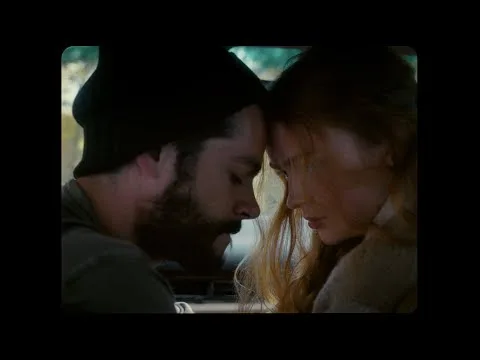
All Too Well (10 Minute Version) extends an already detailed recollection into a longer sequence of emotional turns. The accompanying short film gives that sequence a narrative screen setting, with Sadie Sink and Dylan O’Brien playing the central relationship. It belongs with Red (Taylor’s Version), whose expanded ending makes the long recording part of a newly shaped album.
The film is written and directed by Swift. Its attraction is in the meeting between a song that listeners may know intimately and a visible relationship that cannot remain only in their individual imaginations. [1][2]
- Song
- All Too Well — the short film
- Album
- Red (Taylor's Version)
- Watch
- Official Taylor Swift YouTube video
Watch the video
All Too Well — the short film
YouTube could not play this video here. Open it on YouTube to keep watching.
A remembered room becomes a shared image
A song’s particulars let each listener picture an encounter privately. Film gives some of those emotional situations a common visible form: people have bodies, shared spaces have dimensions, and a gesture can remain in the audience’s memory beside a familiar vocal phrase.
That can change the scale of recognition. A listener may arrive waiting for a musical moment, then notice how the surrounding scene alters its pressure. The longer recording has enough room for recollection to accumulate, while the film can let an encounter unfold through behavior rather than only through a singer’s retrospective address. [1][2]
The expanded album ends somewhere new
The original Red places All Too Well fifth, before the bright movement of 22. Red (Taylor’s Version) returns to that position and later closes its thirty-track sequence with the ten-minute recording. A central album song becomes the extended edition’s final statement as well.
Those placements offer two different listening experiences. In the original core, memory gives way to a change of social energy; at the expanded ending, the listener remains with the longer recollection. Watch the film, then compare those points in the two album pages. The difference is a concrete reason to keep the editions separate even when many song titles are shared. [2]