In this story
The Life of a Showgirl begins by invoking Ophelia, then moves to the name of Elizabeth Taylor. Two women already surrounded by stories provide the opening with different scales of recognition: a literary figure and a screen icon. The record soon moves toward more everyday wishes and disputes, but the theatrical frame remains available throughout.
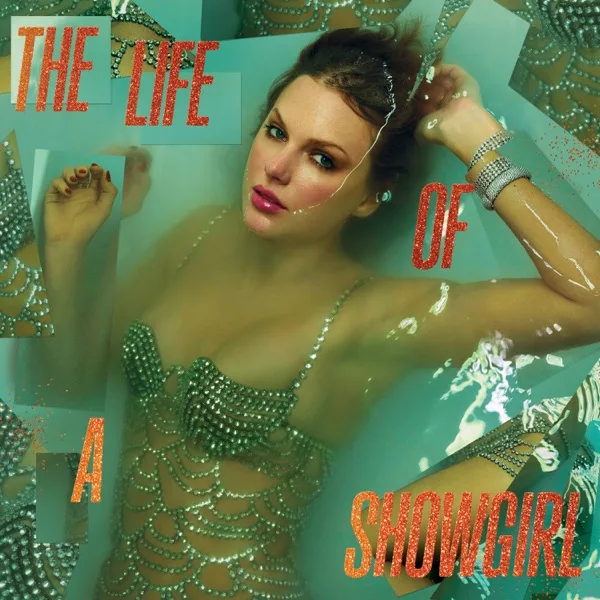
Swift’s twelfth original studio album was released on October 3, 2025. Its twelve-track sequence reunites her with Max Martin and Shellback and ends with Sabrina Carpenter on the title song. The short running order is a useful part of its personality: the record can move between polished spectacle and intimate preference without turning every idea into a long separate room. [1]
Listen to the album
Listen to The Life of a Showgirl. The tracklist below follows the original 12-song core; streaming platforms may also offer expanded editions.
Tracklist [1]
-
01
The Fate of Ophelia3:46 Listen ↗
Listening note
A familiar literary figure gives the opening an inherited story to redirect. The lift of the arrangement makes the title’s darker associations feel mobile.
-
02
Elizabeth Taylor3:28 Listen ↗
Listening note
A screen icon’s name frames the relationship between glamour and scrutiny. The song introduces visibility as a condition with an emotional cost.
-
03
Opalite3:55 Listen ↗
Listening note
A bright central hook gives the opening stretch a more buoyant release. The title’s gleam suits a song interested in a changed emotional atmosphere.
-
04
Father Figure3:32 Listen ↗
Listening note
A protective role acquires questions of influence and control. The recording makes authority part of the intimacy rather than an unrelated outside concern.
-
05
Eldest Daughter4:06 Listen ↗
Listening note
The fifth-track title turns toward a family position loaded with expectation. Hear the contrast with the famous names that opened the album.
-
06
Ruin The Friendship3:40 Listen ↗
Listening note
A familiar connection is placed at risk by wanting it to become something else. The compact premise makes hesitation part of the attraction.
-
07
Actually Romantic2:43 Listen ↗
Listening note
Romantic language becomes a sharp social assessment. The track’s brisk attitude changes the sequence after the previous song’s more vulnerable proposition.
-
08
Wi$h Li$t3:27 Listen ↗
Listening note
A desired future is measured through what the narrator wants it to contain. The title’s commercial styling contrasts with the intimacy of the wish.
-
09
Wood2:30 Listen ↗
Listening note
Playful double meanings give the later sequence a deliberately cheeky turn. The short track works as a quick change of tone within the album.
-
10
CANCELLED!3:31 Listen ↗
Listening note
Public disapproval becomes the backdrop to a statement of allegiance. The song asks which connections survive a hostile surrounding conversation.
-
11
Honey3:01 Listen ↗
Listening note
An affectionate address offers a softer landing before the finale. The change of mood gives the closing duet room to become a new scene.
-
12
The Life of a Showgirl (feat. Sabrina Carpenter)4:01 Listen ↗
Listening note
Sabrina Carpenter joins the final account of performance and its demands. A second voice makes the album’s title a shared role as well as a solo identity.
A famous name can introduce a private concern
The opening titles carry existing associations before the songs begin. That gives the narrator something to work with and something to escape. A listener may arrive with an image of tragedy or glamour, while the recording asks how those familiar stories can be redirected toward the voice speaking now.
Father Figure introduces another charged role. Its premise makes care and authority difficult to separate, an effective contrast with the clearer pleasure of Opalite. Placed early in the sequence, the change gives the album’s bright surface a more complicated relationship to power and protection.
Eldest Daughter then provides the fifth track with a familial title rather than the name of a celebrity. The change of scale matters: a recognizable position within an ordinary household can carry expectations just as a public image can. The album’s performance theme reaches beyond the stage into the roles through which people learn to present themselves. [1]
The title track turns a solo story into company
Ruin The Friendship makes taking a risk with an existing relationship its compact premise. Wi$h Li$t, later in the sequence, asks what a desired future should actually contain. These titles pull the record away from performance as pure visibility and toward the practical question of whom to be with and what to want.
The later run of Wood, CANCELLED! and Honey makes another brisk change of tone, moving through play, social allegiance and affectionate address. The record benefits from being heard in sequence, because the contrasts prevent a single attitude toward fame or intimacy from becoming its whole explanation.
Sabrina Carpenter’s appearance on the closing title track gives the showgirl frame a second voice. The ending can be heard as company within a demanding role rather than simply a solo performer admiring her own stage. Start with The Fate of Ophelia, Father Figure, Wi$h Li$t and the title song, then return to the twelve-track order for the quicker changes of mood between them. [1]