In this story
The Tortured Poets Department entered public view before anyone could hear its songs. Swift announced the album while accepting Best Pop Vocal Album for Midnights at the 2024 GRAMMYs. A later release would therefore arrive with an already memorable public entrance, even though much of its music concerns intensely private thought.
The record was released on April 19, 2024, with The Anthology expanding it to thirty-one songs. Its visual and stage chapter uses a restrained, often monochrome world around writing, performance and exposure. This guide follows those public choices; the album page separates the original sixteen-song core from the larger edition. [1][3][4]
Fortnight supplies a world of rooms and roles
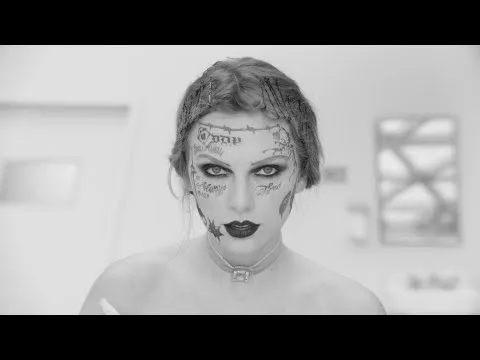
The Fortnight video gives the album an immediately recognizable screen atmosphere. Its high-contrast presentation and institutional settings make the people within it look positioned, observed and constrained. Those choices provide a productive visual context for a record whose speakers often assess the roles expected of them.
Post Malone’s appearance gives the central relationship another visible figure, just as the recording adds another voice. The screen can then make distance and contact spatial: people occupy rooms, positions and frames rather than existing only inside a remembered address.
The video’s official credits list Swift as director and Rodrigo Prieto as director of photography. That collaboration matters as a concrete part of the visual work, but the viewer’s entrance remains the scene itself. The contrast between formal surroundings and troubled intimacy gives the record a world to inhabit before the rest of the songs have become familiar. [1][3][4]
A performance about performing acquires another frame
I Can Do It With a Broken Heart provides a particularly revealing bridge between the recording and the tour. The song allows public competence and private difficulty to coexist. Its official video draws on performance and backstage imagery, placing the labor of producing a show beside the result audiences see.
That is a different sort of visual proposition from Fortnight’s fictional world. One constructs an imagined setting; the other makes an existing performance environment part of the song’s presentation. The chapter gains range from letting both routes remain available.
The Eras Tour’s later inclusion of the new album also changes the larger catalog journey. A retrospective show can make room for music released while the tour is already underway. The period therefore belongs both to a new record and to an evolving public performance of the older ones. Follow the album into Fortnight, then toward I Can Do It With a Broken Heart, to notice how differently a private narrative can meet a public frame. [1][3][4]