In this story
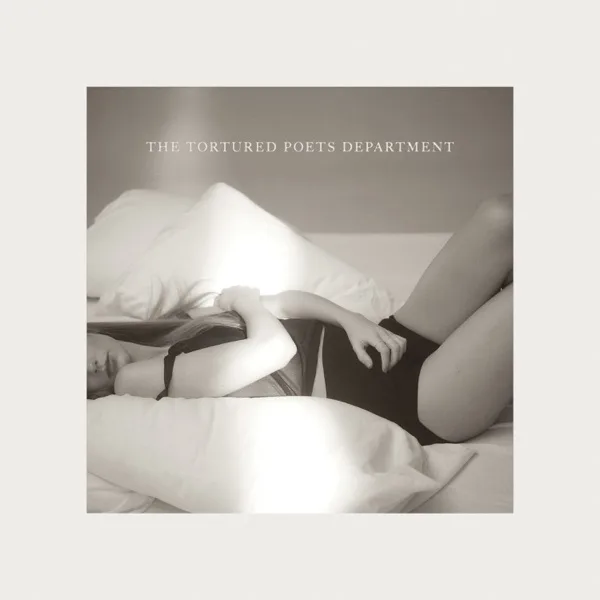
The Tortured Poets Department opens with Fortnight, a duet in which an emotionally outsized history fits inside an apparently limited span of time. The title track follows with a different voice—more conversational, more impatient with the roles people construct around themselves. The opening already establishes that this record’s hurt will have several ways of speaking.
Released on April 19, 2024, the original sixteen-track sequence contains both long narratives and abrupt changes in posture. Its characters can grieve, argue, imagine escape or keep performing. This page preserves that core sequence. The Anthology expands the release to thirty-one songs, and physical editions also carried different bonus tracks. [1]
Listen to the album
Listen to THE TORTURED POETS DEPARTMENT. The tracklist below follows the original 16-song core; streaming platforms may also offer expanded editions.
Tracklist [1]
-
01
Fortnight (feat. Post Malone)3:48 Listen ↗
Listening note
An intimate aftermath feels much larger than the span named in the title. Post Malone’s presence helps give the memory a second vocal color.
-
02
The Tortured Poets Department4:53 Listen ↗
Listening note
Conversation punctures the grand identity promised by the title. The track moves between affectionate recognition and impatience with self-dramatizing roles.
-
03
My Boy Only Breaks His Favorite Toys3:23 Listen ↗
Listening note
The image of a damaged favorite object makes attachment and destruction difficult to separate. The pop momentum keeps the complaint immediate.
-
04
Down Bad4:21 Listen ↗
Listening note
An impossible encounter becomes a metaphor for an overwhelming loss. The comparatively contained surface gives the emotional dislocation a strange composure.
-
05
So Long, London4:22 Listen ↗
Listening note
The fifth track makes leaving a slow, costly recognition. Its patient development gives an accumulated history more weight than a quick farewell.
-
06
But Daddy I Love Him5:40 Listen ↗
Listening note
A romance acquires an audience of disapproving observers. The narrator’s address pushes against the expectation that her choice requires their permission.
-
07
Fresh Out The Slammer3:30 Listen ↗
Listening note
Escape is imagined as an immediate change of surroundings and attachment. The title makes the new opening feel urgent before it can feel stable.
-
08
Florida!!! (feat. Florence + the Machine)3:35 Listen ↗
Listening note
Florence + the Machine joins a duet that treats a destination as a possible release. The forceful atmosphere makes escape sound enticing and uneasy together.
-
09
Guilty as Sin?4:14 Listen ↗
Listening note
An imagined connection becomes emotionally consequential before it becomes an ordinary encounter. The song holds desire beside the question of its boundaries.
-
10
Who’s Afraid of Little Old Me?5:34 Listen ↗
Listening note
The minimizing language of the title is answered with theatrical menace. The vocal scale makes being underestimated part of the drama.
-
11
I Can Fix Him (No Really I Can)2:36 Listen ↗
Listening note
A confident plan to change another person becomes a compact, revealing premise. The title’s insistence contains the possibility of its own reconsideration.
-
12
loml4:37 Listen ↗
Listening note
A cherished description is reassessed after loss. The quieter setting lets the changing meaning of a relationship emerge through the narrator’s attention.
-
13
I Can Do It With a Broken Heart3:38 Listen ↗
Listening note
A polished performance and a difficult private feeling continue at once. The bright pulse makes their coexistence uncomfortable rather than contradictory.
-
14
The Smallest Man Who Ever Lived4:05 Listen ↗
Listening note
A contained assessment grows into a larger demand for answers. Listen to the later change in intensity as the voice becomes harder to dismiss.
-
15
The Alchemy3:16 Listen ↗
Listening note
An arrival is imagined through a vocabulary of competition and recognition. Its mood changes the record after the preceding track’s reckoning.
-
16
Clara Bow3:36 Listen ↗
Listening note
The closing song considers fame through comparisons with earlier women. Recognition is offered at the cost of being fitted to an existing image.
The private feeling has an audience
But Daddy I Love Him addresses the crowd judging a connection, making outside opinion part of the relationship’s pressure. Who’s Afraid of Little Old Me? uses a more theatrical scale, turning a familiar minimizing phrase into an ominous title. Both songs make the audience an active presence rather than a neutral group of witnesses.
I Can Do It With a Broken Heart gives the conflict its most direct performance setting. Its bright, driven surface and difficult emotional premise can be heard simultaneously. Competence does not prove that the person doing the job is unhurt; the polished result can exist alongside the private cost of producing it.
That contrast becomes more interesting beside loml’s quieter assessment. One song lets a crowd-facing task continue, while the other remains inside the narrator’s recalculation of an intimate history. The sequence lets those positions answer each other without pretending that finishing the show has finished the grief. [1]
Clara Bow changes the subject of the final comparison
The Smallest Man Who Ever Lived develops from a contained assessment into a more forceful address. Its later expansion makes the act of questioning feel public even while the record remains a studio encounter. The Alchemy then changes the mood again, offering an arrival after the preceding reckoning.
Clara Bow closes the standard edition by shifting attention toward the comparisons used to introduce an emerging star. Names become a way of promising recognition while making a new person resemble someone already familiar. The ending widens the record from one speaker’s relationships to the system of attention surrounding a performer.
For a first route, play Fortnight, So Long, London, I Can Do It With a Broken Heart and Clara Bow. They reveal four different scales of address: an intimate aftermath, a considered departure, a public-facing task and a story about fame itself. The full sequence makes the emotional changes between them considerably less tidy. [1]