In this story
The 2024 GRAMMYs look has an unusually clear graphic idea: a long off-white gown set against black gloves. The simplicity of the palette makes its changes of texture more visible, from the drape across the torso to the corset lacing and the jewelry at the throat.
The designer is Schiaparelli, with the custom Haute Couture gown designed by Daniel Roseberry. This gallery concentrates on the clothes and their different photographic scales. The event page follows the two Midnights wins and the announcement of The Tortured Poets Department that gave the same evening its musical turning points. [1]
The train makes the outfit larger than the body
The wide view lets the pale train occupy the floor, while black gloves give the upper body a sharply contrasting outline.
Matt Winkelmeyer / Getty Images, via ELLE · Source ↗The gathered fabric softens the front of the fitted silhouette. Dark gloves separate the arms from the pale surface.
Matt Winkelmeyer / Getty Images, via ELLE · Source ↗The rear angle exposes the laced construction, giving the same dress a different pattern and texture.
Matt Winkelmeyer / Getty Images, via ELLE · Source ↗The long pale train makes the gown occupy the floor as well as the upright figure. It changes the photograph’s proportions: the body remains narrow, while the garment spreads into a broader shape beneath it. The black gloves give the arms a strong contrasting outline, preventing the upper silhouette from dissolving into one continuous pale surface.
The full-length view is especially useful because a tightly cropped portrait cannot show how much of the design belongs to the ground. A small turn changes the train’s position and the folds across the front. The outfit can therefore keep a recognizable graphic impression while producing different arrangements in successive photographs.
Schiaparelli’s description identifies silk crepe, a draped bustier and a laced-back corset detail. The front and rear views let those elements coexist visibly. Soft folds and a more explicit fastening pattern belong to the same dress, giving its restrained palette several different textures. [1][2]
A watch changes the scale of attention
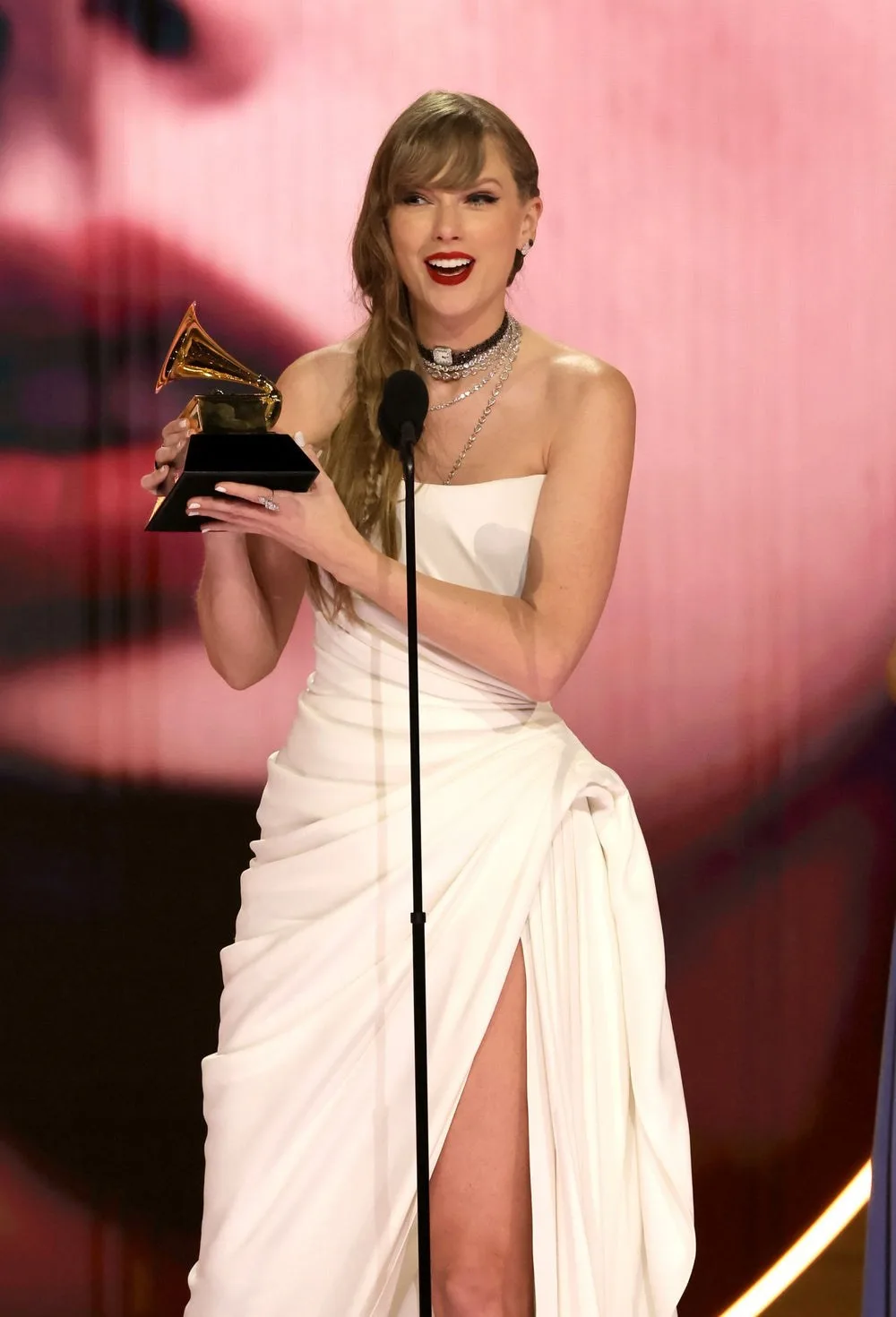
The portrait moves attention from the train to smaller accents: the watch at the neck, contrasting hair textures and a compact red lip.
Getty Images, via Vogue · Source ↗Pale and dark silhouettes share the frame, creating a different composition from the solo portraits.
Frazer Harrison / Getty Images, via ELLE · Source ↗A close view brings the watch at the neck into focus. An object normally worn at the wrist moves into the position of a pendant, so the viewer notices both its shape and its unusual placement. Layered jewelry, a braid and looser hair provide several smaller lines within the larger black-and-white composition.
The red lip supplies another compact accent. Unlike the train, it does not need a wide frame to work. The outfit can thus offer a strong distant silhouette and a close portrait with its own points of interest. Looking between those scales makes the appearance more varied than its limited palette first suggests.
The photograph with Lana Del Rey changes the composition again. Swift’s pale dress sits beside a darker silhouette, turning a solo look into a relationship between two figures. The clothes retain their identities, but their contrast now depends on sharing a frame. That is a useful ending to the gallery: a red-carpet outfit participates in an occasion, and the people nearby become part of how it is remembered. [2][3]