In this story
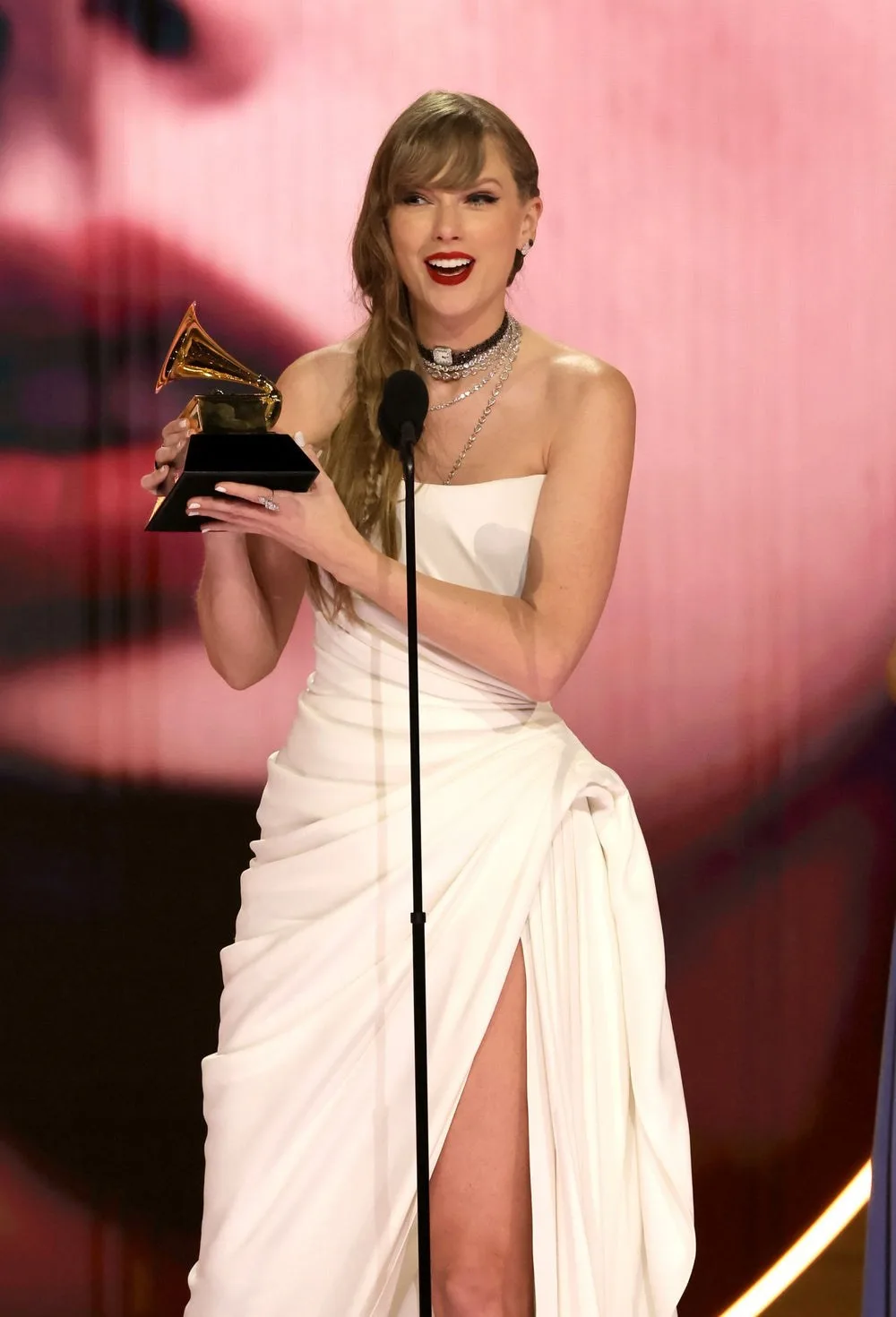
Taylor Swift’s 2024 GRAMMYs appearance held two album stories in the same evening. Midnights won Best Pop Vocal Album and Album Of The Year. During the first acceptance, she announced The Tortured Poets Department, due on April 19. Recognition for one record became the setting for the public introduction of another.
The appearance was just as legible in photographs: an off-white gown against black gloves on the carpet, a long train, layered necklaces and a small watch at the neck. A fitted corset and loose draping made the dress seem controlled and fluid at once. Onstage, the gloves came off; the gown remained as the evening moved from arrival to announcement and celebration. [2][3][4]
Watch the acceptance speech
Watch Swift accept Album Of The Year for Midnights in the Recording Academy’s official clip.
YouTube could not play this video here. Open it on YouTube to keep watching.
A silhouette built for the whole frame
The wide view lets the pale train occupy the floor, while black gloves give the upper body a sharply contrasting outline.
Matt Winkelmeyer / Getty Images, via ELLE · Source ↗The wide red-carpet view explains the outfit more clearly than a close crop can. The off-white dress extends into a long train, while the black gloves put a hard outline around the upper body. The composition depends on the difference between a large pale surface and a few dark accents.
That contrast gives the appearance a strong graphic quality without requiring an elaborate background. In the full-length photograph, the train occupies the floor as visibly as the wearer occupies the center. The outfit asks to be read at two scales: an expansive silhouette from a distance, and a more intricate arrangement of fabric and accessories up close.
The photographs also show how the pose changes the dress. One angle emphasizes the drape across the front; another exposes the lacing at the back. The same garment can appear fluid or tightly constructed depending on where the camera stands. [4]
Draping in front, structure behind
The gathered fabric softens the front of the fitted silhouette. Dark gloves separate the arms from the pale surface.
Matt Winkelmeyer / Getty Images, via ELLE · Source ↗The rear angle exposes the laced construction, giving the same dress a different pattern and texture.
Matt Winkelmeyer / Getty Images, via ELLE · Source ↗Schiaparelli identifies the custom look as an off-white silk-crepe draped bustier gown designed by Daniel Roseberry, with a laced-back corset detail. The paired photographs make that description visible. In front, the fabric gathers across the body; behind, the lacing gives the construction a more explicit rhythm.
The interest lies in how those two surfaces coexist. The drape lets the dress seem to fall naturally, while the fitted structure makes the silhouette precise. The gloves intensify that precision by keeping the arms visually distinct from the pale fabric. The front and back are related views of one design, but they offer different pleasures to the eye.
The back adds a pattern that the front largely conceals. Its repeated lacing contrasts with the larger folds across the torso, while the train continues the pale fabric onto the floor. This balance between fastening, drape and extension gives the outfit several distinct textures within a restrained palette. [3][4]
A clock, a braid and a second person in the frame
The portrait moves attention from the train to smaller accents: the watch at the neck, contrasting hair textures and a compact red lip.
Getty Images, via Vogue · Source ↗Pale and dark silhouettes share the frame, creating a different composition from the solo portraits.
Frazer Harrison / Getty Images, via ELLE · Source ↗The close portrait changes the scale again. A watch sits among the necklaces at the throat; a braid and looser hair create different textures across the same shoulder. The black-and-white outfit gives those smaller elements room to register. The red lip supplies a compact color accent in an otherwise restrained palette.
The clock is an arresting accessory because an ordinary object for measuring time has been moved to the place where a pendant would usually sit. It changes how the jewelry is noticed. The photograph gives the viewer a visible detail to return to without needing a private explanation for why it was chosen.
The picture with Lana Del Rey adds another visual relationship. Two contrasting silhouettes share the frame, with Swift’s pale dress beside Del Rey’s darker outfit. The carpet stops being a sequence of isolated portraits and becomes a setting for people appearing together. The difference in texture and color makes the paired composition memorable on its own terms. [4][5]
The first acceptance opens the next chapter
The Best Pop Vocal Album win provided the evening’s first major turn. Swift used the acceptance to announce The Tortured Poets Department and its April 19 release date. The new title entered public view in a room that was recognizing Midnights.
That timing made the announcement unusually concentrated. The audience did not encounter it through an isolated release notice; it arrived within an acceptance speech, with the previous record still at the center of the event. The moment combined gratitude for completed work with an invitation toward music that listeners had not yet heard.
The announcement also changed the temporal direction of the evening. An award looks back at work already released; a new album title asks the audience to imagine what comes next. Swift placed those two movements inside the same acceptance, so the celebration could become an opening before it had finished. [2]
A fourth Album Of The Year win
Later in the ceremony, Celine Dion presented Album Of The Year to Midnights. It became Swift’s fourth win in the category. The previous three had recognized Fearless, 1989 and folklore, making the new result part of a longer sequence across markedly different records.
The award does not make those albums sound alike. Its interest is partly the opposite: the four titles represent different arrangements, narrative distances and public images. Midnights joins that sequence with a record concerned with internal conversations, late-night recollections and the changing scale of a voice.
In her acceptance, Swift brought the celebration back to making music: finishing a song, finding a bridge and preparing the work that would follow. The trophy marked a public result, while the speech returned attention to a continuing practice. That focus linked the retrospective honor to the new release she had already announced. [2][6]
The night’s turning points
The two wins and the announcement share a date, but each has a different role in the story. The pop award recognizes the recording within its field. Album Of The Year connects it to the broader ceremony and Swift’s previous wins. The announcement introduces the next release while both recognitions are still happening.
This overlap is what makes the appearance worth returning to. The clothes provide a coherent visual impression; the ceremony supplies several meanings that unfold over time. A photograph can hold them together, but the order of events explains why the night belongs to more than one album chapter.
| Moment | Why it matters |
|---|---|
| Red-carpet arrival | Custom Schiaparelli gives the evening its main visual silhouette. |
| Best Pop Vocal Album | Midnights wins; Swift announces The Tortured Poets Department. |
| Album Of The Year | Midnights becomes her fourth winner in the category. |
| 2024-04-19 | The announced release date for the next album. |