In this story
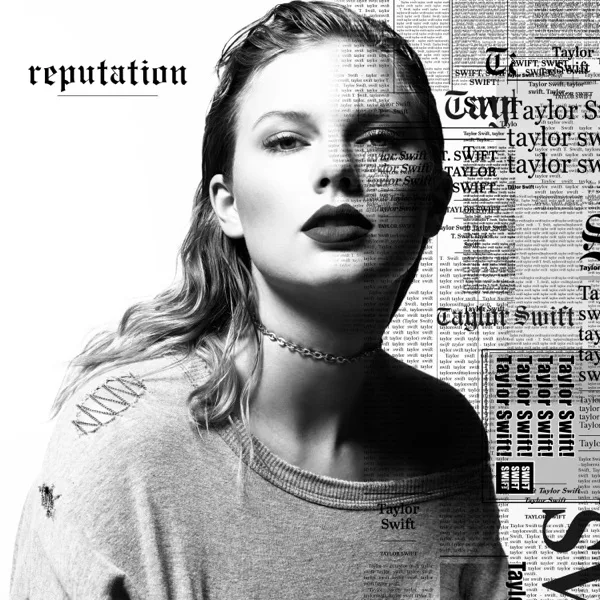
The loudest moment on reputation is not its last word. The album opens with the heavy impact of ...Ready For It?, moves through threats, desire and escape, and ends with the piano of New Year’s Day. That distance is the record’s central pleasure: the person behind the formidable entrance gradually becomes easier to hear.
Released on November 10, 2017, the original standard edition contains fifteen tracks. Look What You Made Me Do arrives sixth, after Delicate. That placement matters. The comeback single’s confrontational pose is interrupted before it even begins by a song that worries about whether a new connection can survive a damaged public image. [1]
Listen to the album
Play the original standard edition while you explore the songs.
Tracklist [3][4]
-
01
...Ready For It?3:28 Listen ↗
Listening note
The clipped, low-register verses meet a much more open refrain. Listen for the change in scale: the forceful entrance contains a dreamier version of the same attraction, before the heavy pulse returns.
-
02
End Game (feat. Ed Sheeran & Future)4:04 Listen ↗
Listening note
Three distinct vocal presences turn the song into a succession of introductions. Swift, Ed Sheeran and Future occupy the same rhythmic space differently; the refrain keeps bringing their separate approaches back to one shared ambition.
-
03
I Did Something Bad3:58 Listen ↗
Listening note
The vocal attacks and explosive refrain treat defiance as a physical performance. Rather than hearing only the accusation, listen to how strongly the arrangement invites the narrator to enjoy making it.
-
04
Don’t Blame Me3:56 Listen ↗
Listening note
The growing intensity makes desire sound overwhelming. The vocal climbs out of the lower, more controlled passages toward a much bigger release; the scale of that release is part of the song’s argument.
-
05
Delicate ↗3:52 Listen ↗
Listening note
The softened, processed voice and restrained pulse make uncertainty audible. Hear it immediately before track six: the desire to be accepted and the posture of retaliation are much closer together than the album’s cover suggests.
-
06
Look What You Made Me Do ↗3:31 Listen ↗
Listening note
The chorus pares its melody down while the verses and bridge keep changing character. A repeated accusation holds the center; the surrounding vocal performances turn it into something increasingly theatrical.
-
07
So It Goes...3:47 Listen ↗
Listening note
The darker, close-set texture keeps the attraction suspended rather than resolving it into an uncomplicated celebration. Listen to the space around the voice and the way repetition seems to deepen the same private scene.
-
08
Gorgeous3:29 Listen ↗
Listening note
The playful surface and flustered delivery interrupt the album’s imposing confidence. The narrator can describe an attraction vividly while sounding distinctly less in command of herself; awkwardness becomes part of the pleasure.
-
09
Getaway Car3:53 Listen ↗
Listening note
The arrangement’s forward motion makes escape feel thrilling before the story reveals its cost. Listen for how the momentum continues even as the relationship becomes harder to sustain. The rush is not a guarantee of safety.
-
10
King of My Heart3:34 Listen ↗
Listening note
The stronger rhythmic arrival changes the scale of the declaration. Movement between more contained passages and the fuller refrain makes the new certainty sound discovered in real time rather than calmly stated at the outset.
-
11
Dancing With Our Hands Tied3:31 Listen ↗
Listening note
The dance-oriented surface gives the fear inside the song an uneasy momentum. Hearing the movement as both release and pressure makes the relationship’s imagined fragility more apparent.
-
12
Dress3:50 Listen ↗
Listening note
The breathier, reduced hook narrows the listener’s distance from the voice. Compare its intimate scale with the more public entrances earlier in the album: a large pop record can also make an encounter feel enclosed.
-
13
This Is Why We Can’t Have Nice Things3:27 Listen ↗
Listening note
The exaggerated, taunting delivery reopens the public confrontation after the intimacy of Dress. This interruption matters to the sequence: reputation’s move toward a private life is uneven, and resentment can return.
-
14
Call It What You Want3:23 Listen ↗
Listening note
The steady, softer surroundings let the relationship exist at a distance from external judgments. Hear it as preparation for the last track: protection begins to sound like a place to live rather than a posture to display.
-
15
New Year’s Day3:55 Listen ↗
Listening note
The piano-led reduction makes ordinary continuity the album’s final concern. After the imposing electronic entrance, the quieter arrangement changes what strength sounds like: remaining close after the exciting moment has passed.
The production builds a suit of armor
Max Martin, Shellback and Jack Antonoff are central collaborators on reputation. Their involvement connects the album to 1989, but the new record uses its pop machinery differently: low-end weight, abrupt vocal attacks and sharply separated textures make the opening stretch feel like a series of entrances.
In ...Ready For It?, the clipped delivery of the verses meets a more open, melodic refrain. I Did Something Bad makes the voice another piece of percussion; Don’t Blame Me reaches for a swelling, almost devotional intensity. These are three different uses of excess. The first announces a presence, the second revels in defiance, and the third makes desire sound overwhelming.
The album does not keep that scale constant. Delicate softens the surface through processed vocals and a restrained pulse. Dress pares its hook down to breath and repetition. New Year’s Day finally removes much of the electronic spectacle. The changes in scale give the quieter songs their force; softness becomes something the record has made room for rather than its default setting. [2]
Track 5 to track 6: vulnerability meets retaliation
Delicate and Look What You Made Me Do are an unusually revealing pair of neighbors. One narrator is anxious about being accepted; the next adopts a hard, repetitive accusation. The change can sound less like a new subject than a rapid change of defensive posture. Fear and bravado sit one track apart.
Gorgeous, at track eight, adds another useful complication. Its attraction is flustered, comic and awkward. It breaks the illusion that the album’s speaker is always in control. Getaway Car then turns romance into movement: its gleaming momentum is pleasurable even as its escape story makes the relationship feel unstable.
The second half does not simply become gentler. This Is Why We Can’t Have Nice Things, track thirteen, stages another large, taunting confrontation after Dress. That interruption prevents a tidy journey from anger to peace. Public resentment can return even when a more private life has begun to take shape. [3]
Why the last two songs change the picture
Call It What You Want and New Year’s Day close the album by narrowing its field of attention. The former places the relationship at a distance from the judgments surrounding it. The latter trades the excitement of a party for the work of staying afterward. The details are deliberately ordinary: intimacy lasts beyond the moment when it is photogenic.
The piano ending matters as sound as well as subject. After an album full of vocal effects, layered hooks and imposing beats, the reduced arrangement makes listening feel close to the singer. It does not cancel the record’s theatrical aggression. It gives that aggression a context: the outside world is loud, while the thing worth protecting can be quiet.
Ending here makes reputation more interesting than its first single suggests. The album offers revenge as spectacle, but it saves its final space for continuity. Its public performance of being untouchable gives way to the private wish for someone to remain. That change in scale lets the album finish with an intimacy its opening had kept at a distance. [1]
Four entry points into the record
For the album’s changes of scale, move from ...Ready For It? to Delicate and then New Year’s Day. For its storytelling in motion, start with Getaway Car: the rush is part of the problem the story describes. For its theatrical side, pair Look What You Made Me Do with its Joseph Kahn video, where confrontation becomes a procession of competing selves.
These four starting points catch different kinds of movement: between verse and refrain, between processed voice and exposed feeling, through a story of escape, and finally toward a more intimate ending. Each makes another part of the record easier to hear.
| Track | Listen for | What it opens up |
|---|---|---|
| ...Ready For It? | The change from clipped verses to an open refrain. | The contrast inside the album’s imposing entrance. |
| Delicate | The softened vocal and restrained pulse. | Uncertainty beneath the confident presentation. |
| Getaway Car | The forward rush of the arrangement and story. | An escape that keeps creating new complications. |
| New Year’s Day | The reduced piano-led scale. | The intimacy of staying after the spectacle. |