In this story
The debut chapter begins with a person trying to make her songs useful to someone else’s memory. Tim McGraw does that with a familiar name; Our Song finds a hook in everyday sounds. Beyond the record, the same directness makes the early public image legible: a guitar, a young songwriter and stories whose settings feel within reach.
The album arrived on October 24, 2006. This era page follows the larger act of introduction—the performances, videos and growing recognition around that release. The album page keeps the eleven-track sequence intact; here, the question is how those songs became an identity audiences could recognize before they knew the whole catalog. [1]
A recognizable entrance before a recognizable era
An early performance with acoustic guitar
Photograph published in Taylor Swift’s official era archive · Source ↗A guitar in an everyday interior
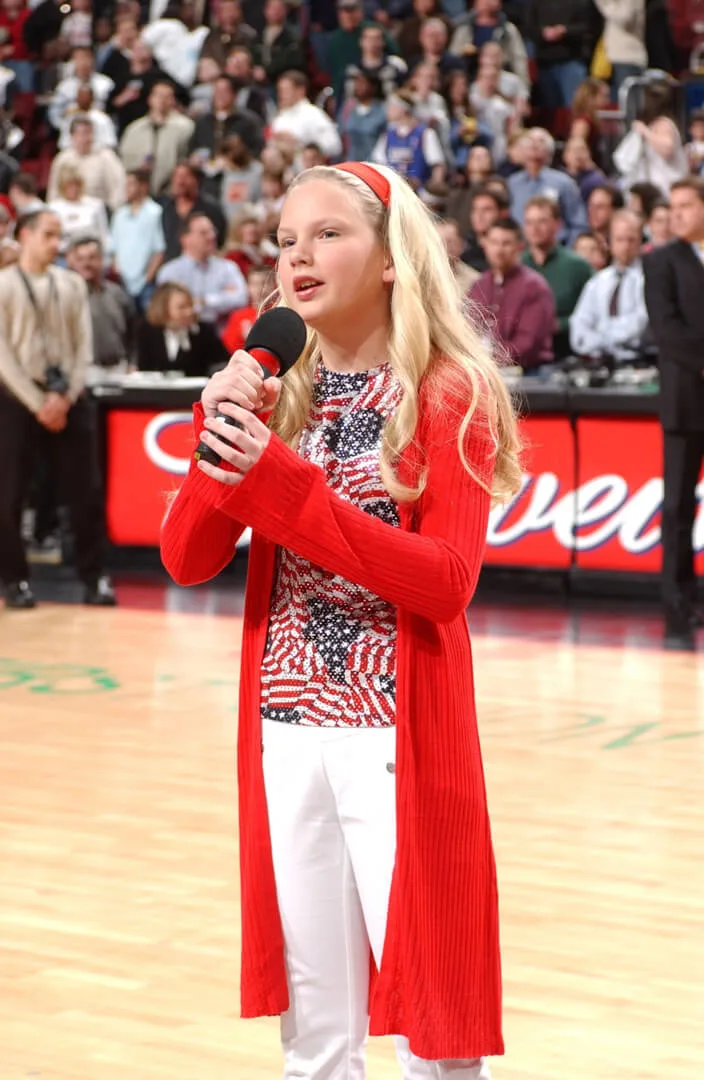
Photograph published in Taylor Swift’s official era archive · Source ↗The early photographs are striking for their changes of setting. A guitar appears in a small performance space, in a domestic room and before a public audience. The instrument gives the pictures a consistent center while the rooms become larger. A listener can follow the person through those changes without needing a radically new visual costume.
That consistency matters for an introduction. The first encounter with an artist may happen through a photograph, a radio single or a brief televised performance. A repeated visual gesture can make those separate appearances belong to the same person. In this chapter, the guitar is both a working instrument and an immediate sign of what the performer is offering.
The videos provide another entrance. Tim McGraw, Teardrops On My Guitar and Our Song turn songs into different kinds of recognizable scenes. One listener may come for the romantic story, another for the chorus, but the close attention to ordinary encounters gives the chapter a connecting language. [1]
The public room begins to change
The official archive records the 2007 CMA Horizon Award and the 2008 ACM New Female Vocalist award among the chapter’s recognitions. Those are useful markers of an introduction becoming an established presence. The songs were no longer only an appeal to notice a new performer; they were becoming part of how the industry described its future.
The transition is visible without treating the early images as a charming prelude to a more important career. Their scale has its own appeal. A small stage makes contact with an audience look immediate, and a comparatively simple public presentation leaves the act of singing and playing unusually easy to see.
For an entry into the chapter, move from Tim McGraw to Our Song, then look at the performance photographs. The pleasure is in seeing how the same storytelling voice works through a recording, a fictional scene and a real room. Fearless would enlarge that room considerably, but this first introduction already supplies many of the gestures that make the later chapters recognizable. [1]