In this story
The costumes in Look What You Made Me Do are not all designed to make their wearer look newly powerful. Some are deliberately familiar. A handwritten shirt, a cheerleading uniform and a red ringmaster outfit can recall an earlier performance before the viewer has had time to think through the reference.
The pleasure is partly recognition, but the new setting does something to that recognition. Outfits once seen in separate videos or performances now share a crowded frame. What used to be a complete persona becomes one voice in an argument.
Inside the wardrobe
Watch Swift walk through the returning wardrobe in the official Looks featurette.
YouTube could not play this video here. Open it on YouTube to keep watching.
Before the cameras roll
The clothes are still on rails, but the contrasts are already visible: sequins, printed fabric, dark stagewear and familiar everyday pieces. The characters begin here, before editing puts them in the same frame.
Taylor Swift / YouTube · Looks (2017) · Source ↗Platforms, decorated heels and pointed pumps extend the wardrobe beyond its best-known jackets and shirts. Color and silhouette continue all the way down to the feet.
Taylor Swift / YouTube · Looks (2017) · Source ↗A closer look starts in the wardrobe room. The rails and tables show how much of the video’s cast is assembled from recognizable clothes and accessories. Here the outfits can be seen separately; later, they will compete for attention in a crowded shot. [1]
Five recognizable returns
The handwritten shirt and black-rimmed glasses recall the bedroom character in You Belong With Me. The wardrobe featurette brings those small, ordinary details close enough to see.
Taylor Swift / YouTube · Looks (2017) · Source ↗Red sequins, black lapels and gold edging give this jacket its theatrical outline. On the rack, you can see the pieces that made the RED tour figure readable from a distance.
Taylor Swift / YouTube · Looks (2017) · Source ↗Blue, white and gold stripes do much of the identifying work. The uniform carries a complete performance role back into the video, even before a face or a dance move supplies the reference.
Taylor Swift / YouTube · Looks (2017) · Source ↗The pale blue fabric and looping gold letters distinguish this compact red-carpet silhouette from the fuller dresses around it. It recalls an appearance rather than a character from a song.
Taylor Swift / YouTube · Looks (2017) · Source ↗The handwritten Junior Jewels shirt, the RED ringmaster jacket and the blue-and-gold cheerleading uniform each work as a visual shortcut. A few distinctive shapes or words summon the memory of a much larger scene. On the clothes rail, the 2014 VMA bodysuit keeps its distinctive blue fabric and gold lettering; the Our Song dress brings back the volume of an earlier country-era video.
The range is the point. Everyday clothing appears alongside stage spectacle. A teenage bedroom character and a commanding concert performer can both be recalled with equal speed, even though their original settings and ambitions were very different.
| Returning outfit | Earlier association | What makes it readable |
|---|---|---|
| Junior Jewels shirt and glasses | You Belong With Me | Handwriting and glasses supply the character. |
| Red ringmaster outfit | 2013 RED tour | A vivid color and theatrical silhouette. |
| Cheerleading uniform | Shake It Off | A complete performance role in one uniform. |
| Blue tulle dress | Our Song | Volume and color recall the earlier video. |
| Blue bodysuit | 2014 MTV VMAs | The compact silhouette recalls the appearance. |
Why an ordinary T-shirt can do as much as sequins
The oversized black lettering makes the 22 shirt instantly distinctive. A simple white top becomes a strong visual signal through the scale of its words and its sparkling surface.
Taylor Swift / YouTube · Looks (2017) · Source ↗An elaborate costume can make a strong first impression, but recognition depends on distinctiveness rather than price or ornament. The Junior Jewels shirt is effective because its writing and styling belong to a remembered character. Its ordinary fabric does not make it visually anonymous.
The ringmaster works at the opposite scale. It is a performance silhouette built to command attention. Placed beside the shirt, it makes the distance between earlier modes of presentation unusually clear: one asks to be recognized as a familiar person, the other announces a spectacle.
A video this crowded needs both kinds of signal. If every returning figure wore a similarly glamorous outfit, the references would blur. Differences in scale, color and role keep the cast legible during a quick cut or a densely occupied frame.
The new setting changes the old clothes
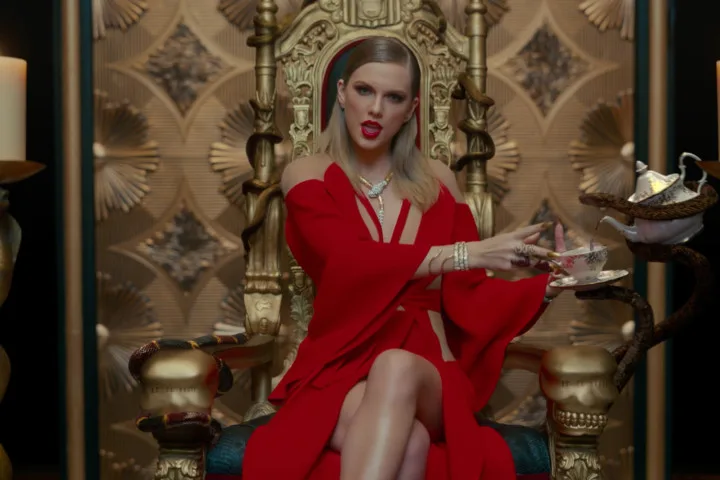
The loose sleeves, deep neckline and layered jewelry create a different kind of authority from the fitted ringmaster jacket. The shared color makes their different shapes especially easy to compare.
Taylor Swift / YouTube · Looks (2017) · Source ↗The orange outfit, curled hair, gold jewelry and swing ropes build the look together. This is a close view of styling in progress, with a crew member making the final adjustments.
Taylor Swift / YouTube · Looks (2017) · Source ↗In their earlier contexts, these outfits helped a single performance or story hold together. The cheerleader belonged to the playful parade of Shake It Off; the handwritten shirt belonged to a teenage character. In Look What You Made Me Do, they become pieces of a retrospective cast.
That shift turns admiration into comedy without making recognition disappear. A persona the audience once took at face value can now appear theatrical when it is placed beside another, contradictory one. The costume remains readable, but its claim to represent the singer completely has weakened.
The final exchange among the personas depends on that tension. The clothes keep the speakers distinct while the dialogue refuses to give them a peaceful reunion. A greatest-hits wardrobe becomes a comic dispute over how the same person has been seen.
A crowd made from wardrobe and stand-ins
The behind-the-scenes steps reveal the practical cast beneath the finished illusion. A silver jacket, plaid pajama trousers, sequins and a red dress keep neighboring figures visually separate.
Taylor Swift / YouTube · Looks (2017) · Source ↗The Taylor Mountain featurette shows the sequence being built with costumed stand-ins. The Looks featurette supplies the wardrobe view. Together they make the scene easier to appreciate as a practical production: many bodies must be dressed so the audience can recognize each version amid the crowd.
The result is more than a display of old looks. Clothing becomes a way to organize space and attention. The viewer can scan the frame, identify a figure and feel the clash between images before stopping to name every reference. That is the wardrobe’s narrative job—and the reason these returns are worth a closer look. [1][3][4]